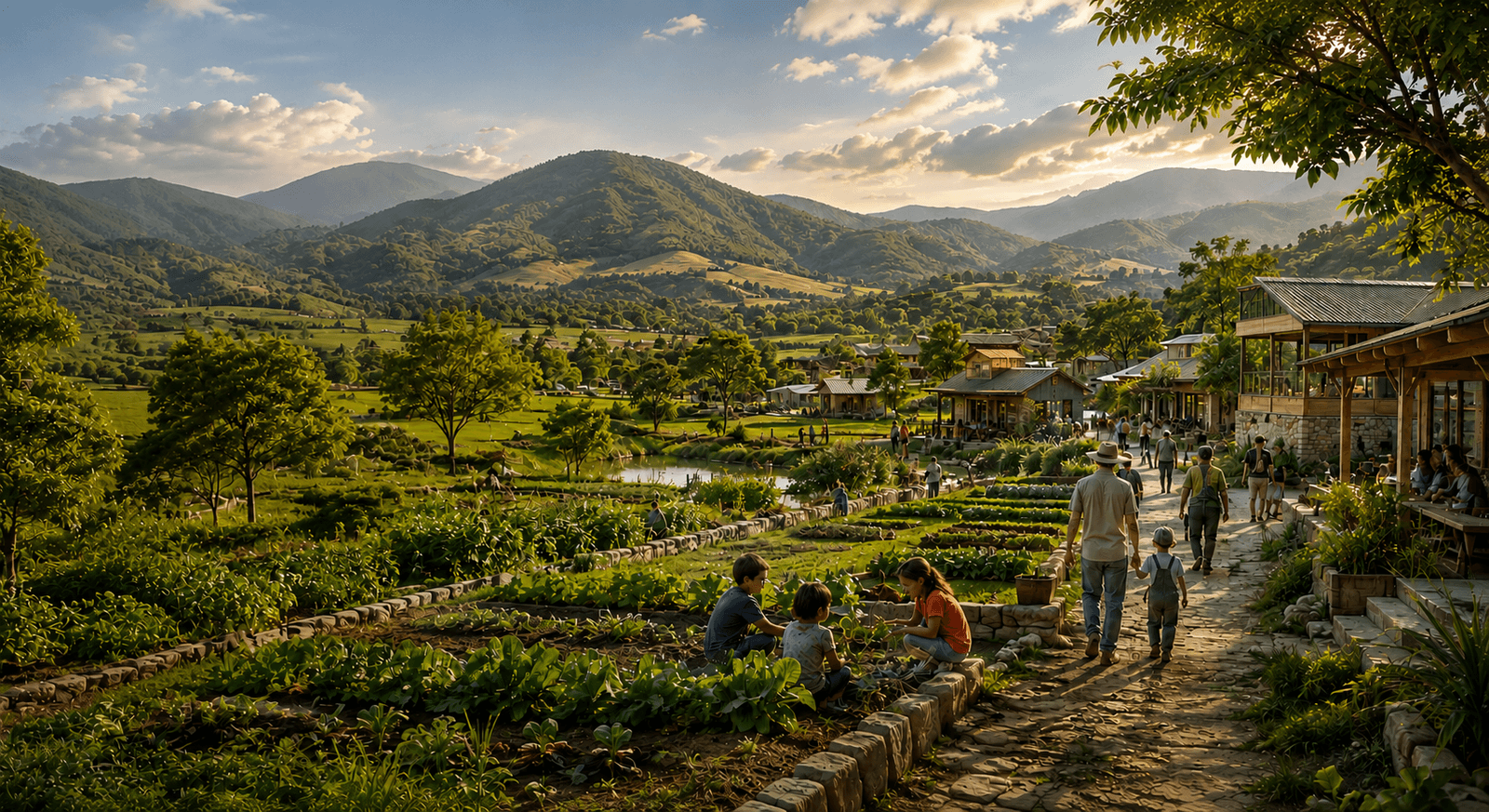
Rethinking How we
Develop the Places
We Live
What if development began not with what
we intend to build, but with the kind of
human life we hope to make possible?
Human Life → Settlement → Development → Form LEARN MORE BELOW ↓
Learning From
the Past to
Reconsider
the Future
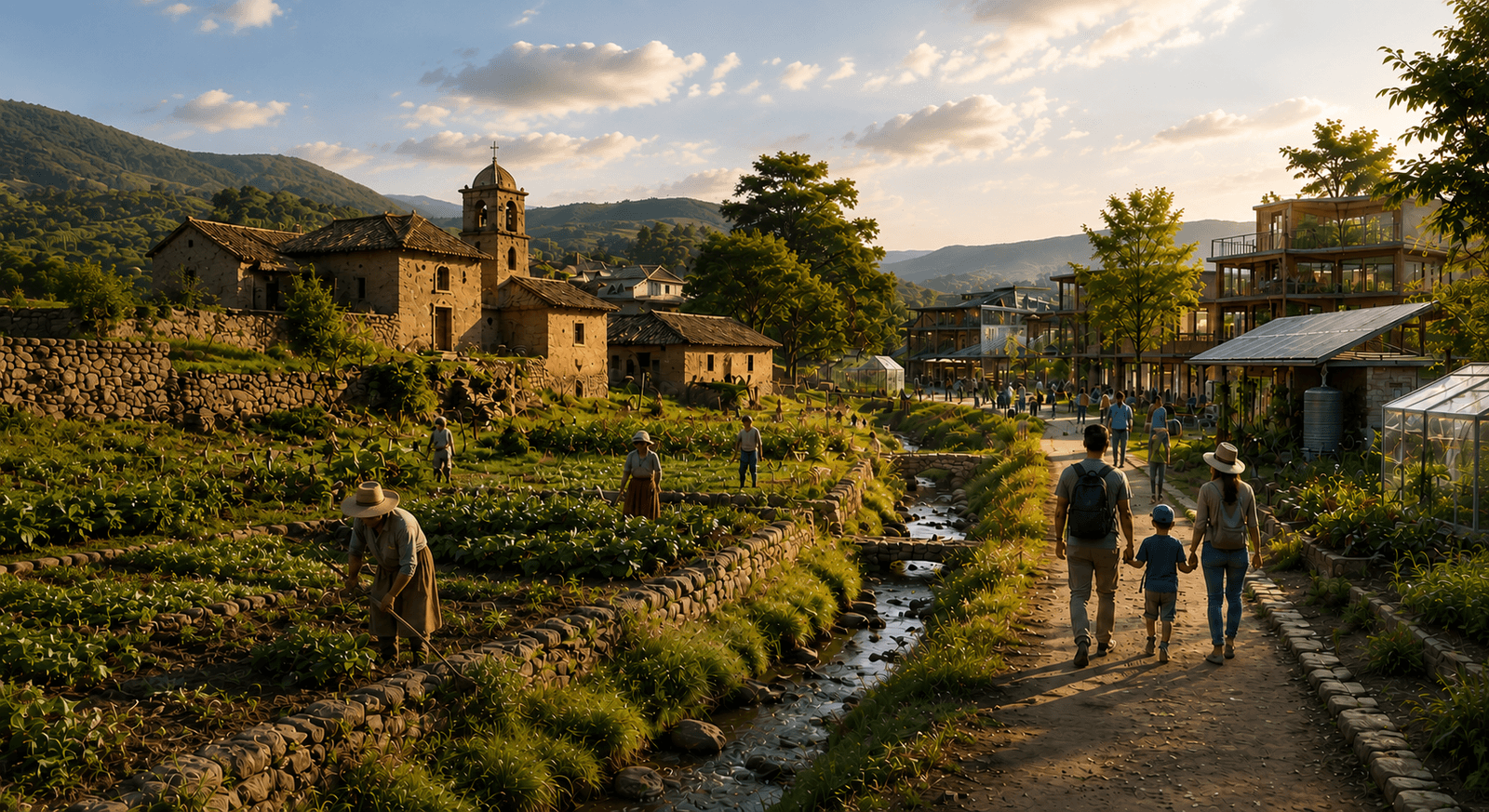
We are examining how today's
development systems evolved—what
they solved, what they improved, what
they displaced, and what new knowledge
and technology now make possible.
EXPLORE THE RESOURCES →
Better Questions
Need More Voices
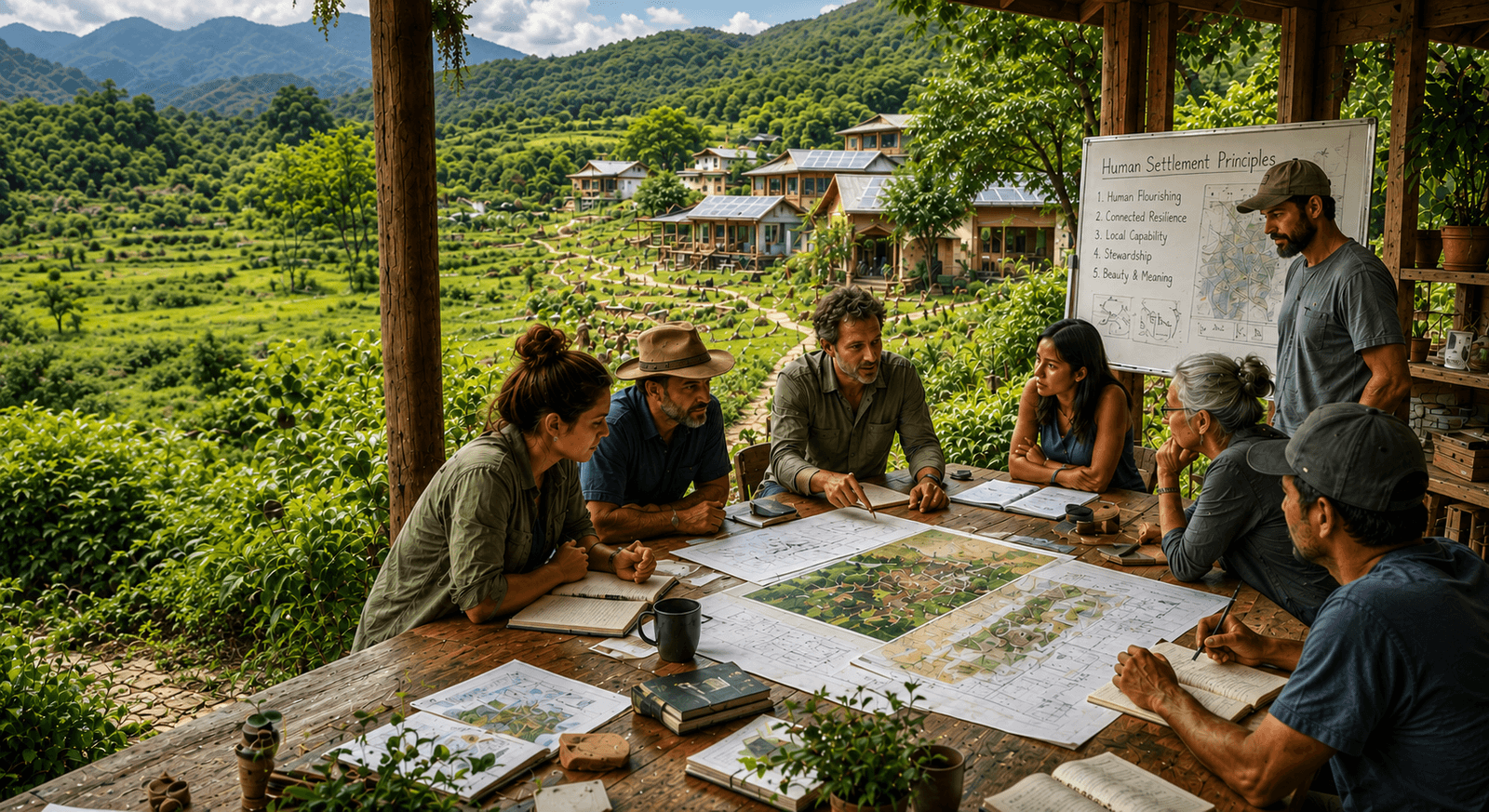
Human settlement cannot be understood
through a single discipline. We welcome
people willing to contribute knowledge,
experience, research, criticism, and new ideas.
JOIN THE WORK →
1 Phone 1 Desktop 2 Phone 2 Desktop 3 Phone 3 Desktop

Investor Developments

A Collective Working Toward a Better Trajectory

Developments is a multidisciplinary collective of people who share a concern: the places we develop profoundly influence the lives people are able to live within them.

Our backgrounds are different. We come from development, design, engineering, economics, education, construction, finance, agriculture, human systems, and other disciplines.

What connects us is a common question:

Can we take what humanity has learned, reconsider the systems shaping contemporary development, and establish a more intentional trajectory toward human flourishing?

Human Settlement

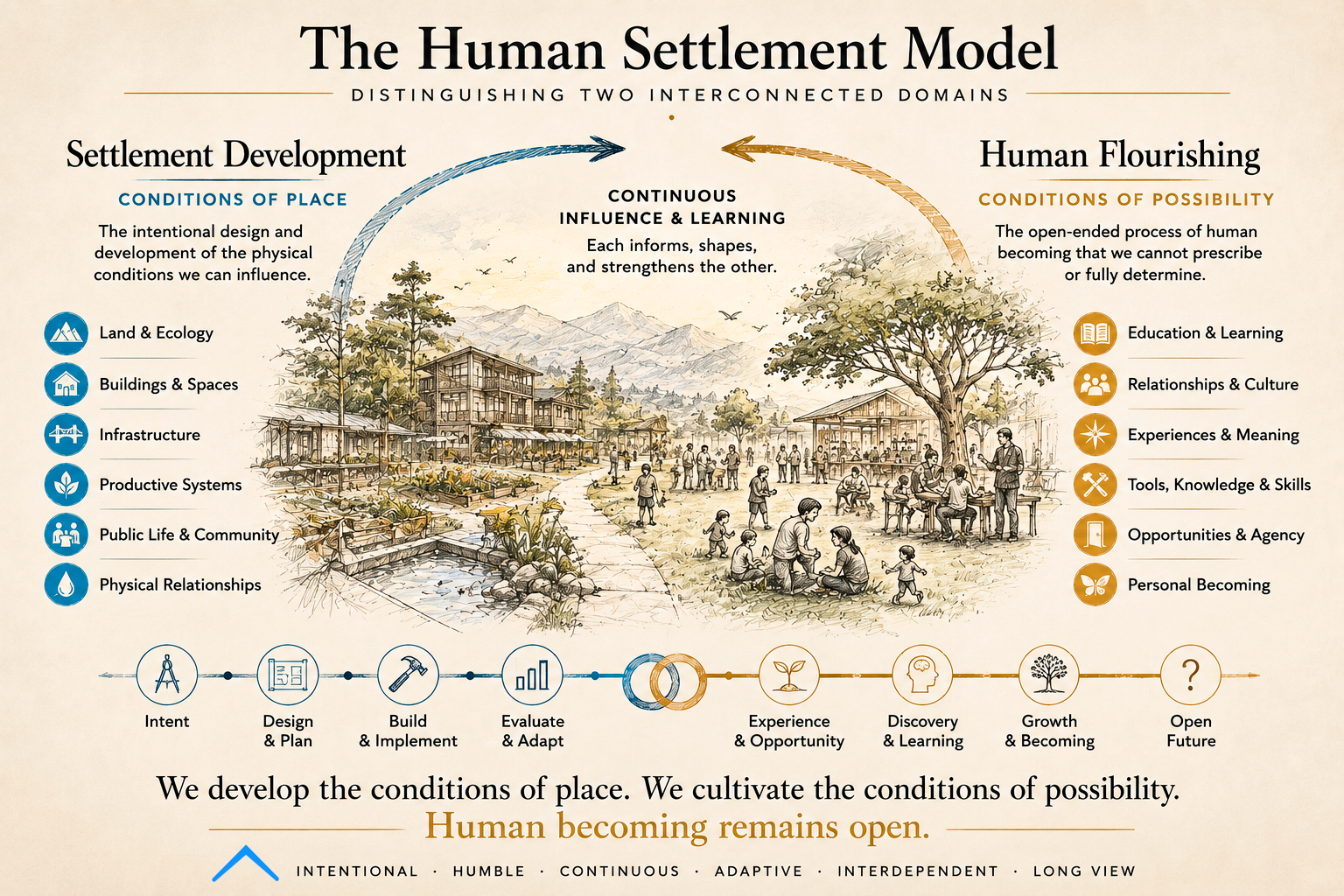
We make an important distinction between settlement and development.

Settlement is the continuing process through which people establish life in a place—forming relationships with one another and with land, food, water, work, ecology, knowledge, culture, production, and the systems that sustain them.

Development is one of the instruments through which the conditions for that life are created.

That distinction changes the order of the questions we ask.

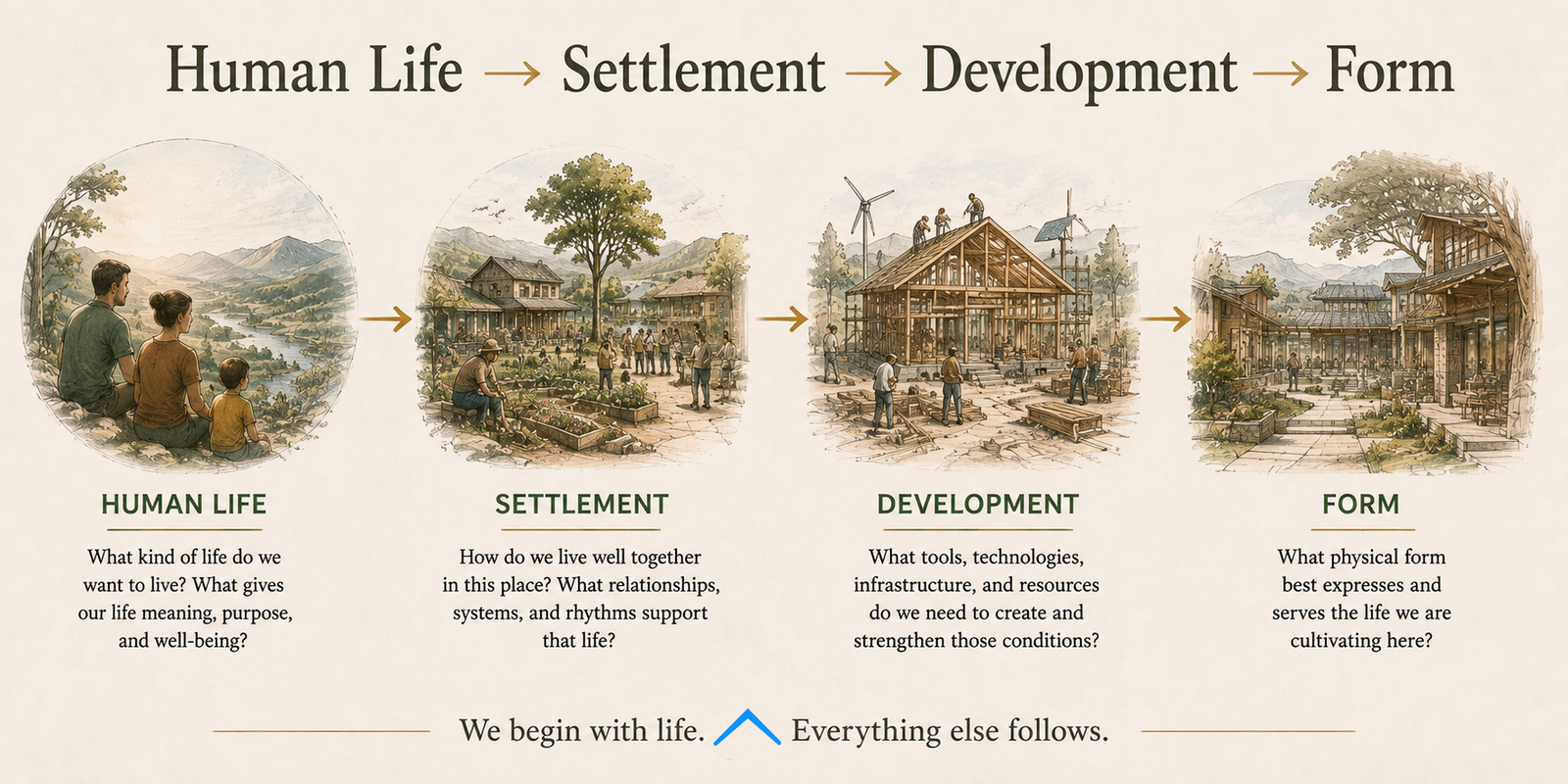
Human Life → Settlement → Development → Form

Rather than beginning with what can be built, we begin by asking:

What kind of human life should this place make possible?

We call this Life Before Form.

We believe the question deserves more than discussion.

We are working to research it, document it, build it, observe it, and share what we learn.

Why Reconsider Development?

Modern development has given us extraordinary infrastructure, sanitation, mobility, technology, economic opportunity, and material comfort. Many of the systems we inherited were created to solve genuine human problems—and succeeded remarkably well.

But solutions accumulate.

Over time, systems developed independently for finance, transportation, housing, land use, food, infrastructure, employment, and other needs have combined in ways their creators could not always have anticipated.

The result can be development that is technically sophisticated, financially successful, legally compliant, and efficiently constructed while nevertheless producing cumulative patterns of dependency, vulnerability, fragmentation, excess consumption, ecological degradation, loss of agency, and diminished quality of life.

We do not believe the answer is to reject what we have built or romanticize the past.

We believe it is worth stopping long enough to understand how we got here, determine where we want to go, and intentionally reconsider the course.

A Direction, Not a Destination

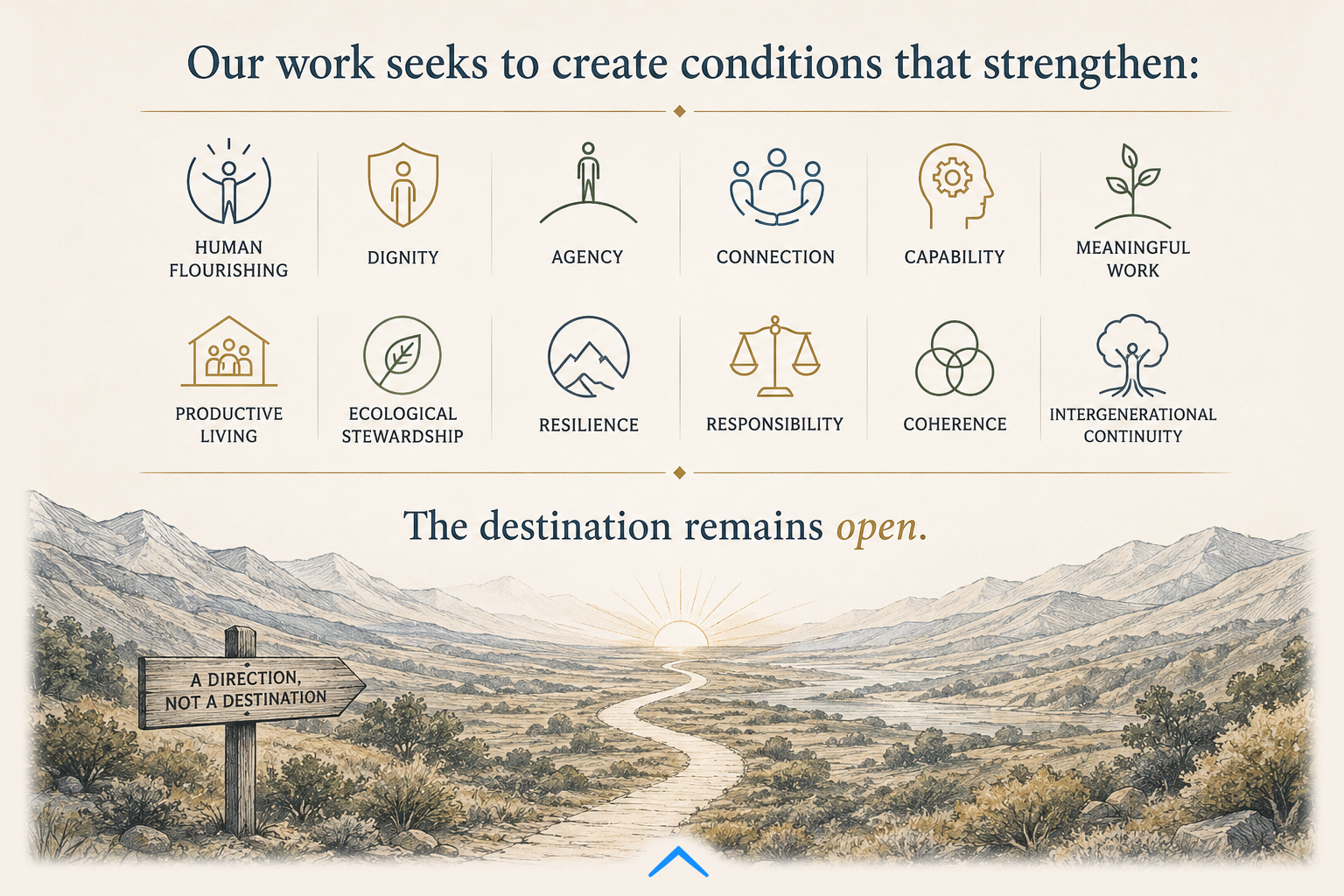
We are not proposing a utopia. Nor are we attempting to prescribe how people should live. We are establishing a trajectory—a direction against which our decisions can be continually evaluated. Our work seeks to create conditions that strengthen: Human Flourishing · Dignity · Agency · Connection · Capability · Meaningful Work · Productive Living · Ecological Stewardship · Resilience · Responsibility · Coherence · Intergenerational Continuity The destination remains open. Methods will change. Technologies will change. Knowledge will change. People and places will differ. The question that remains is: Are we moving in the direction we intend to go?

Learning Before Replacing

We believe progress requires memory.

Many systems we now take for granted emerged because earlier generations encountered serious problems and developed ways to overcome them.

Before changing those systems, we should understand why they exist.

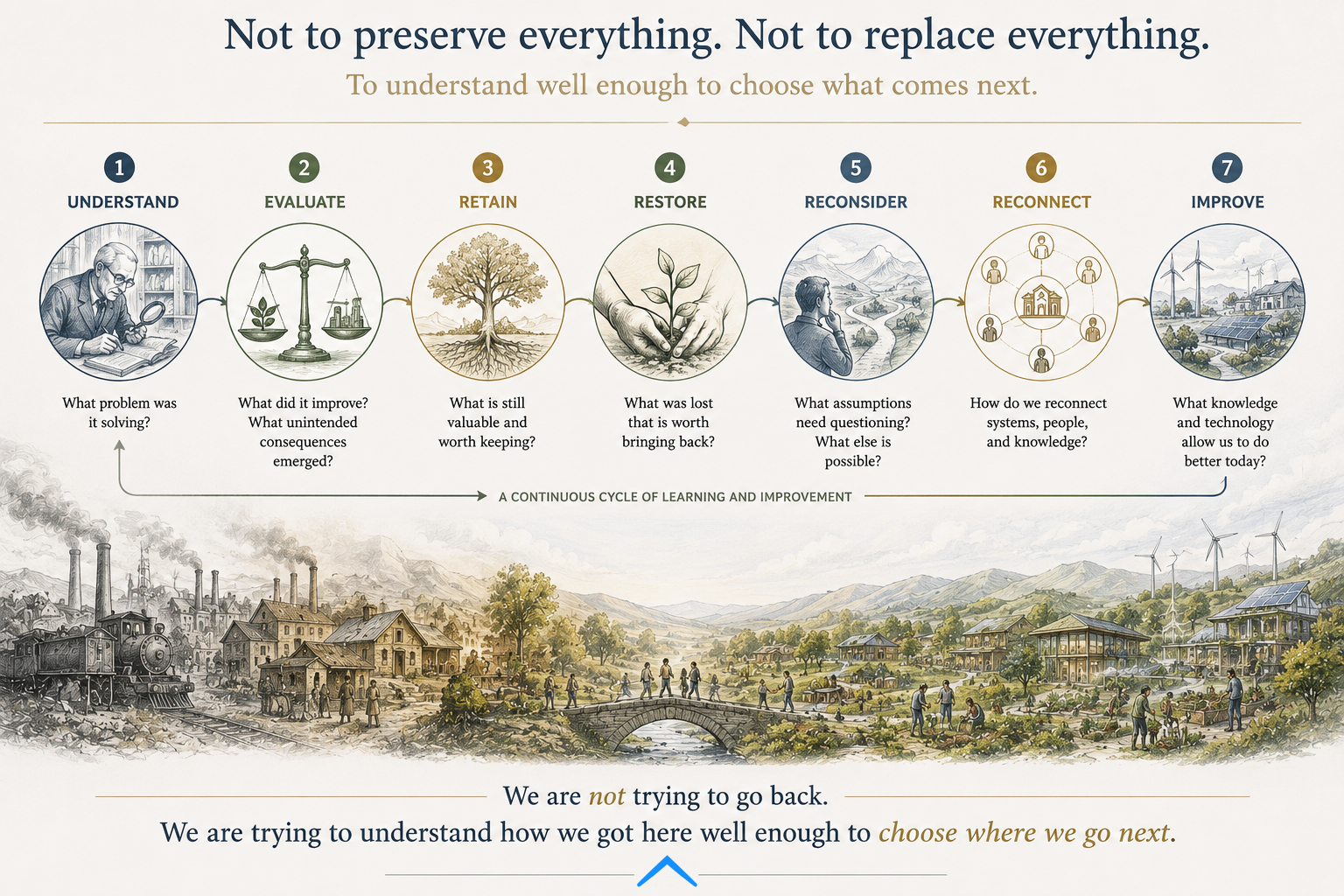
What problem were they solving?

What did they improve?

What knowledge is embedded within them?

What unintended consequences emerged?

What capabilities may have been lost along the way?

And what knowledge or technology exists today that could allow us to respond differently?

Our objective is neither to preserve everything nor to replace everything.

It is to:

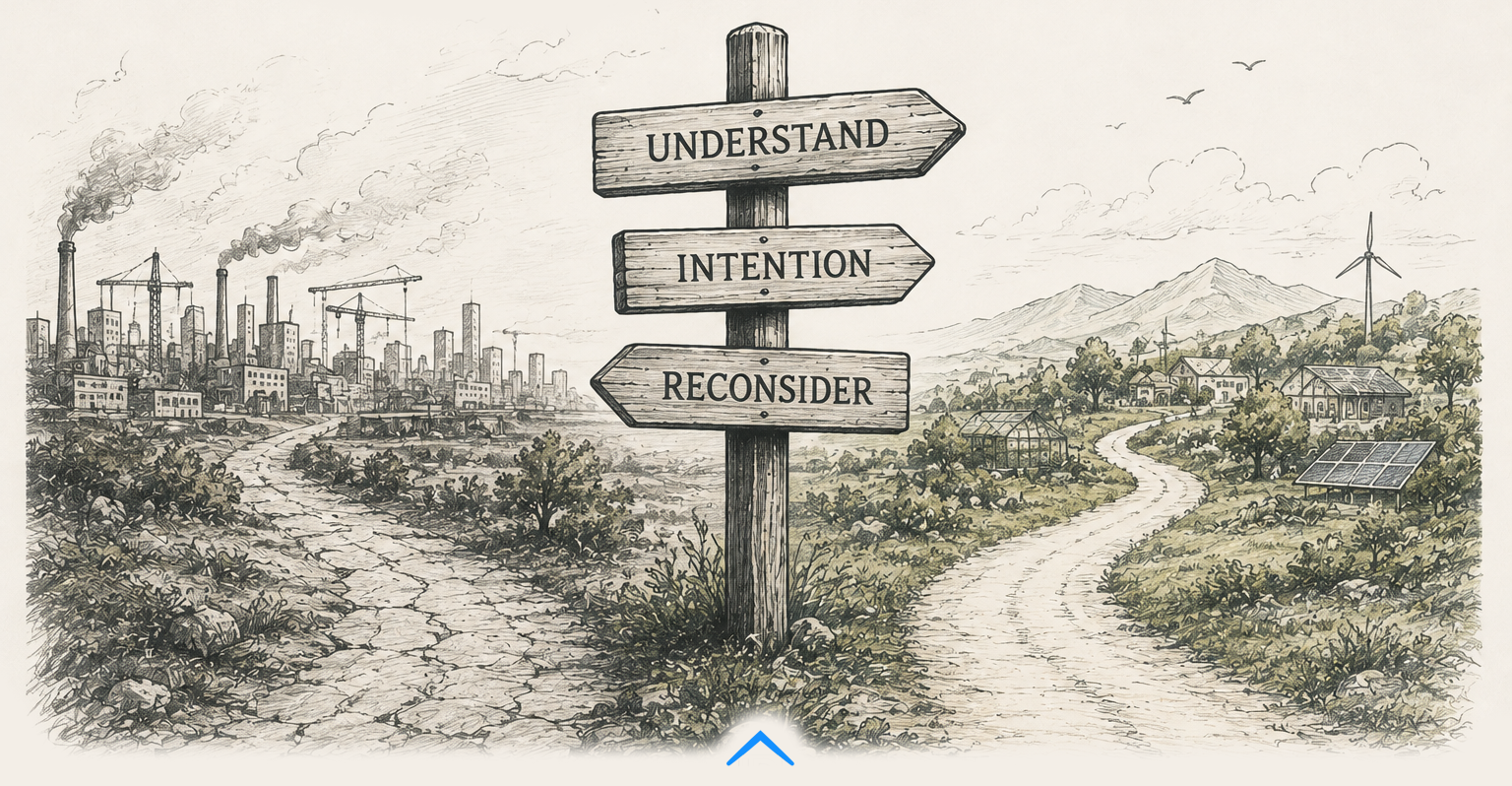
Understand · Evaluate · Retain · Restore · Reconsider · Reconnect · Improve

We are not trying to go back.

We are trying to understand how we got here well enough to choose where we go next.

From Principles to Place

Ideas eventually have to encounter reality.

We are developing the Human Settlement Model as a practical framework for translating these principles into functioning places.

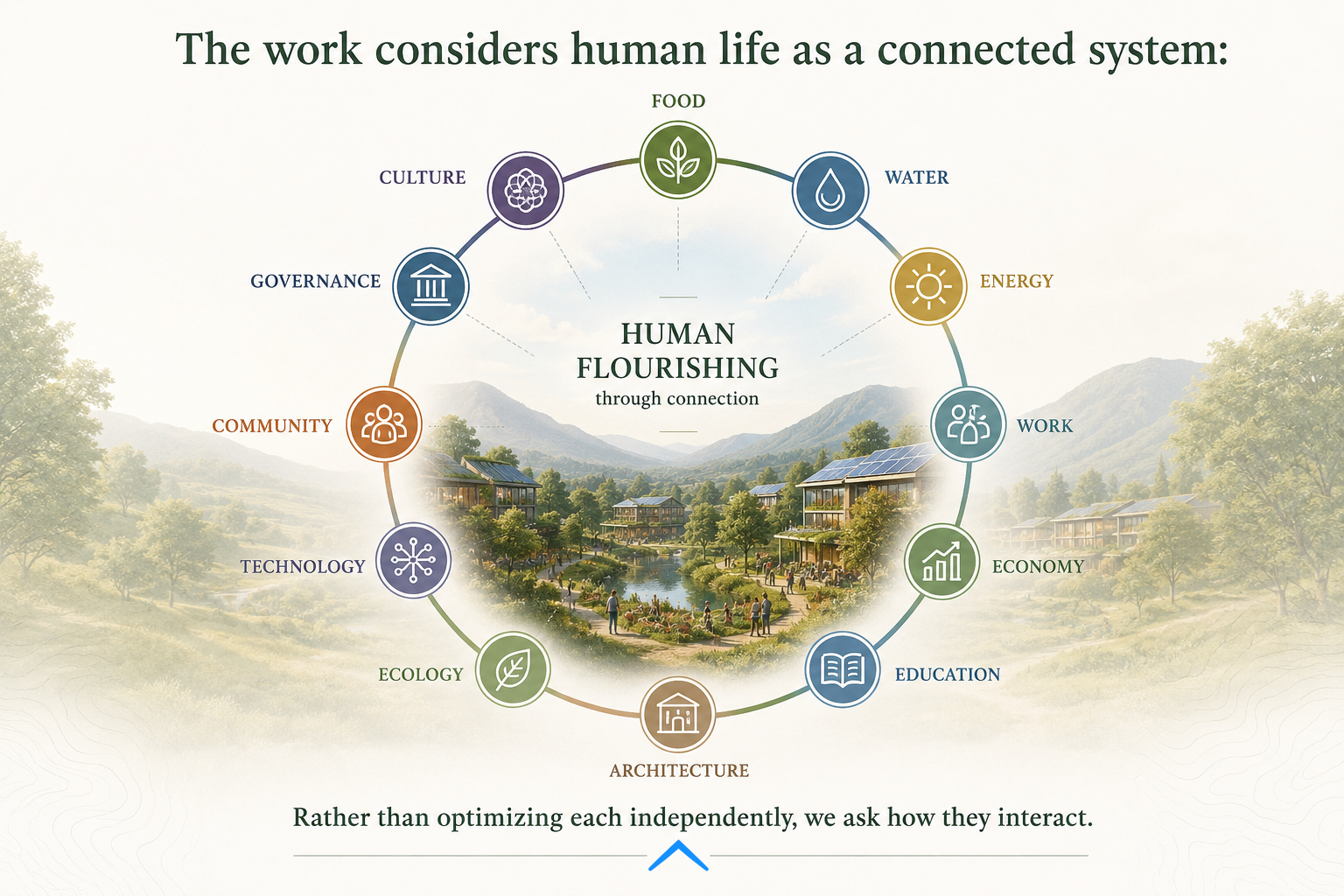
The work considers human life as a connected system:

Food · Water · Energy · Work · Economy · Education · Architecture · Ecology · Technology · Community · Governance · Culture

Rather than optimizing each independently, we ask how they interact.

What capacities should remain close to people?

What benefits from regional or global scale?

What dependencies are reasonable?

Where are we unnecessarily vulnerable?

What technologies increase human capability?

How should population remain related to the capacity of place?

And how can settlements grow without gradually destroying the qualities that made them successful?

The First Model Human Settlement

We intend to put these ideas into practice.

The First Model Human Settlement is not intended to demonstrate that we already possess the answer.

It is a question made physical.


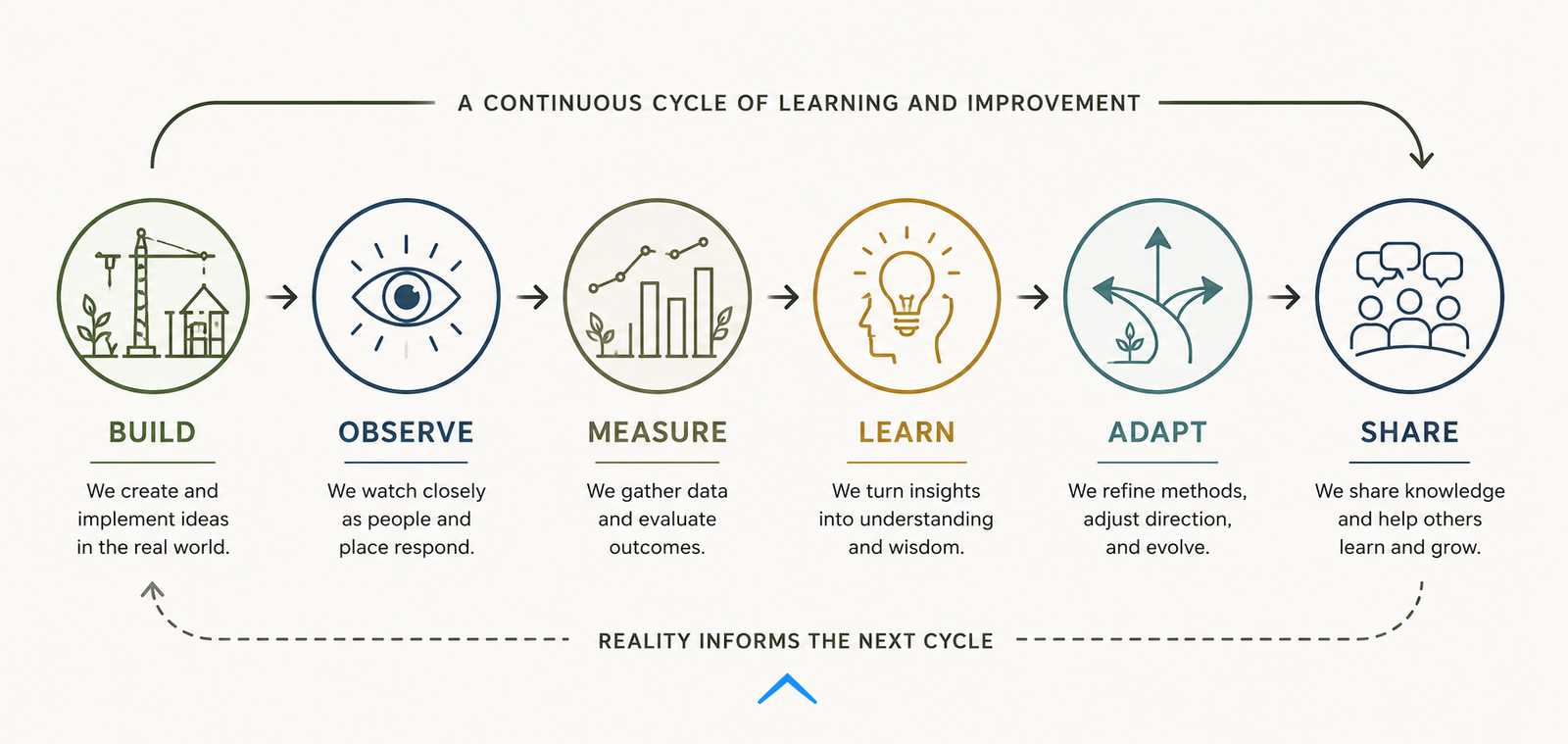
A place where ideas can be built and inhabited.

Where assumptions encounter reality.

Where outcomes can be observed.

Where successes can be documented.

Where failures can teach us.

Where methods can change.

And where knowledge can be shared.

Build → Observe → Measure → Learn → Adapt → Share

The goal is not to create the model everyone else should copy.

It is to create a functioning place from which all of us can learn.

Principles Travel. Places Do Not.

Every place is different. Climate differs. Culture differs. Land differs. Water differs. Economies differ. History differs. Agriculture differs. People differ. The physical form of one successful settlement should therefore not simply be imposed upon another. What can travel is the process: Establish the trajectory. Understand the place. Recover relevant knowledge. Evaluate existing systems. Determine capacity. Understand dependencies. Consider technology. Develop form. Build. Observe. Learn. Adapt.

We seek to develop a process that can travel—not a place that must be copied.

A Place Worth Remaining In

Ultimately, none of this is about creating the most efficient settlement.

Efficiency matters.

Resilience matters.

Food matters.

Energy matters.

Infrastructure matters.

Economics matter.

But they are means rather than the purpose.

The purpose is human life.

We want to explore what it means to create places sufficiently capable, meaningful, productive, connected, beautiful, and alive that people can flourish within them.

Places from which people remain free to explore the world—but do not continually need to escape in order to find what everyday life lacks.

The world is available to me, but my everyday life is sufficiently rich that I do not need to continually escape my place in order to find what life lacks.

That may be one of the simplest expressions of what we are working toward.

This Work Needs More Than Us

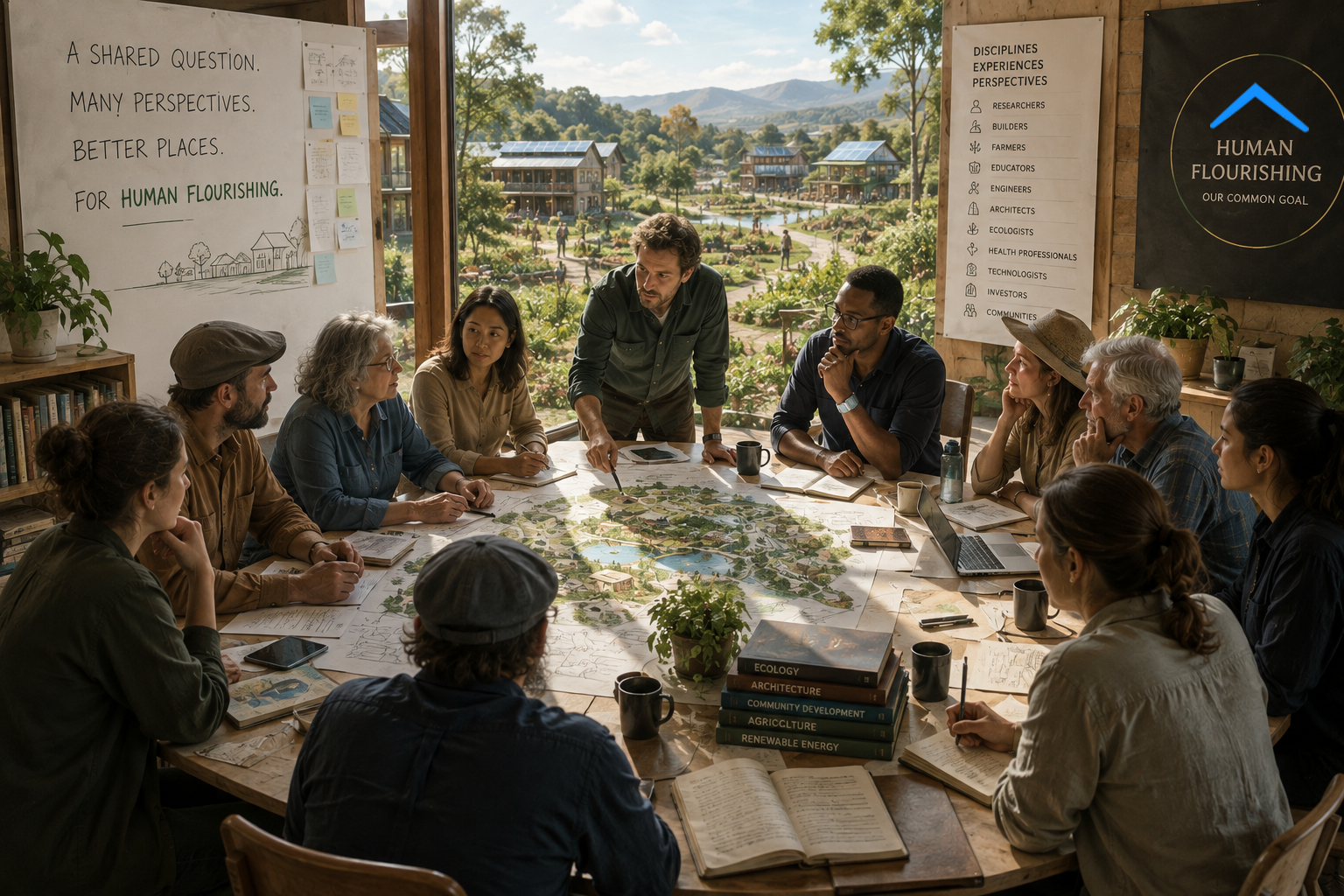
Human settlement cannot be understood through a single profession.

It requires people who understand human beings and people who understand land.

Researchers and builders.

Farmers and economists.

Educators and engineers.

Architects and ecologists.

Health professionals and craftspeople.

Technologists and historians.

Investors and communities.

People with practical experience.

People with academic knowledge.

And people capable of seeing things we have missed.

We welcome those who want to contribute research, knowledge, experience, criticism, ideas, resources, or participation.

You do not need to agree with everything we currently think

You need to care about the question.

Explore the Work

Our work is intentionally open and evolving.

The Principles, thesis, frameworks, research, and eventually the findings from the Model Settlement will be made available as an expanding body of knowledge.

We invite you to read it.

Question it.

Challenge it.

Contribute to it.

And, where useful, apply it.

Low 1.2
Low 2.2
Low 3.2